Your tax return may look completely normal at first glance. But for federal employees and retirees, it can quietly reveal missed planning opportunities that may cost thousands of dollars over time.
That is especially true for “middle class millionaire” federal families, where a pension, Social Security, TSP, IRAs, taxable investments, and other assets can create a complicated tax picture.
The tax return is not just a filing document. It is also a planning document.
When reviewed carefully, it can show whether you are wasting low tax brackets, whether your portfolio is creating unnecessary tax drag, and whether certain “tax-free” investments are actually helping you as much as you think.
Here are three tax red flags I often look for.
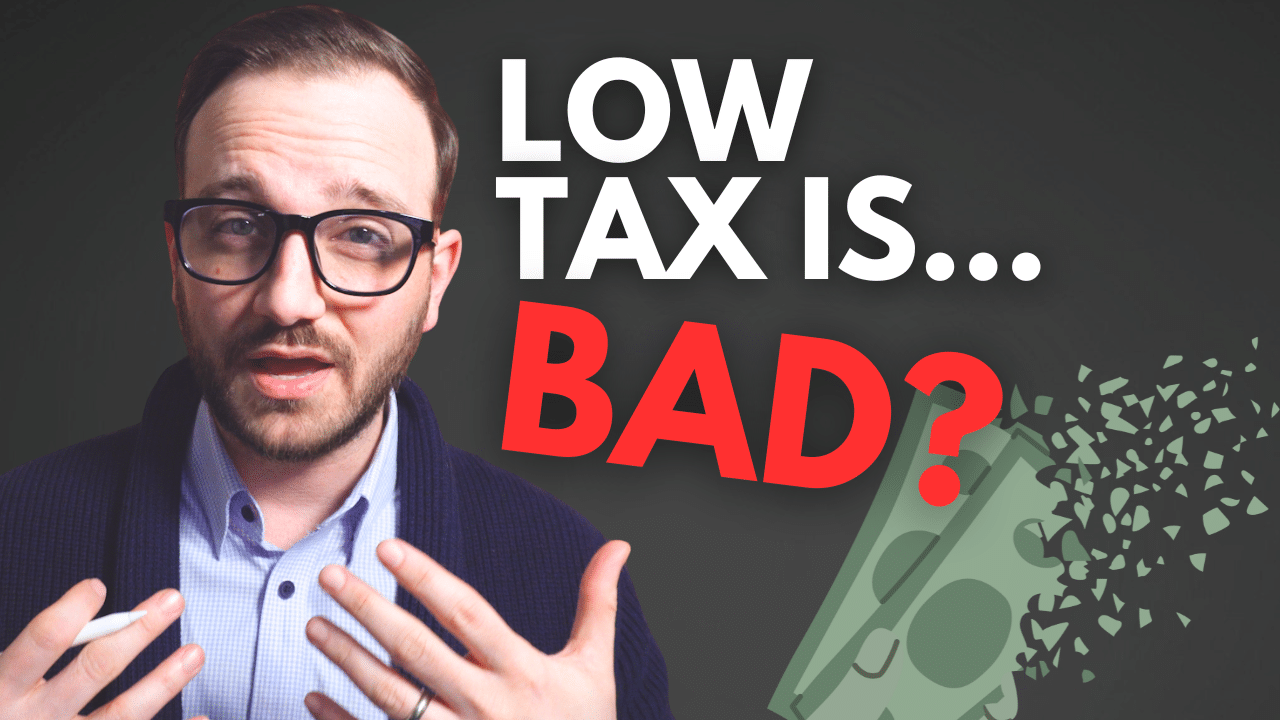
Red Flag #1: Your Taxable Income Is Too Low
Most people assume low taxable income is always a good thing. After all, lower income usually means lower tax.
But for federal retirees, unusually low taxable income can sometimes mean valuable planning opportunities were missed.
One example is capital gains planning.
For 2026, a married couple filing jointly may be able to realize long-term capital gains at a 0% federal capital gains tax rate up to roughly $100,000 of taxable income. That means if you are in a low-income year and you are not intentionally realizing gains, you may be wasting an opportunity to move investment gains out of your portfolio at little or no federal tax cost.
A gain that could have been taxed at 0% today may be taxed at 15% or more in the future, depending on your income, RMDs, Social Security, and other sources of retirement income.
Another example is TSP Roth conversions.
If your projections show that your required minimum distributions may eventually push you into the 22% bracket or higher, a low-income year before RMDs begin may be an opportunity to convert some pre-tax money at lower rates, such as the 10% or 12% bracket.
That does not mean everyone should do Roth conversions. It means low taxable income should raise a question: are we intentionally using this low bracket, or are we accidentally wasting it?
Roth money can grow tax-free if the rules are met. Pre-tax retirement dollars, on the other hand, continue creating future taxable income as they grow.
The goal is not to pay more tax for the sake of paying more tax. The goal is to use low brackets strategically, when appropriate, so you may avoid paying higher taxes later.
Red Flag #2: Your Portfolio Is Creating Tax Drag
This is the part of the tax return many people skip over.
Retirement accounts are generally taxed when money comes out. But non-retirement accounts, such as individual, joint, or trust accounts, can create tax liability throughout the year, even if you did not take withdrawals.
This is where portfolio design starts showing up on your tax return.
You may see taxable interest, non-qualified dividends, short-term capital gains, long-term capital gains, capital gains distributions, or even Net Investment Income Tax. Not all investment income is taxed the same way.
Non-qualified dividends are generally taxed at ordinary income rates, similar to wages. Short-term capital gains are also generally taxed at ordinary income rates. Long-term capital gains and qualified dividends often receive more favorable tax treatment.
So when I review a tax return, I am not only looking at how much investment income was created. I am looking at what kind of investment income was created.
That can reveal whether the portfolio is being managed with tax efficiency in mind.
For example, if a federal retiree has significant taxable interest in a non-retirement account, that may or may not be appropriate. But it should be reviewed.
- Could some investments be placed in different account types?
- Could the portfolio be structured more efficiently?
- Could tax-loss harvesting or tax-gain harvesting be used during the year?
- Could higher earners have avoided the Net Investment Income Tax?
In some cases, that tax could potentially be reduced or avoided through better income planning, withdrawal sequencing, asset location, and portfolio design.
In retirement, you often have more control over how income is created than you did during your working years. You may be choosing how much to withdraw from pre-tax accounts, Roth accounts, taxable accounts, pensions, Social Security, or cash reserves. That control creates planning opportunities that offers massive value.
Another source of tax drag is capital gains distributions from mutual funds.
Many federal employees come to us with mutual funds they have owned for years or inherited. Some of those funds may distribute capital gains near the end of the year, even if the investor did not sell anything.
That can feel frustrating because you may owe tax on gains you did not personally realize.
This does not automatically mean the investment is bad. But it does mean you should evaluate whether the holding still fits your plan, especially inside a taxable account.
Possible strategies may include:
- Building a more tax-efficient portfolio
- Paying closer attention to asset location
- Harvesting losses or gains when appropriate
- Replacing tax-inefficient holdings over time
- Donating highly appreciated shares to charity through a donor-advised fund, if charitable giving is already part of your plan
The key point is simple: your portfolio should not be creating unnecessary tax drag without a clear reason.
Red Flag #3: Your “Tax-Free” Bonds May Be Costing You Money
This one can feel like a contradiction How can a tax-free investment be a problem? The answer is that tax-free does not always mean better.
Municipal bonds are a common example. Many municipal bonds pay interest that is exempt from federal income tax. Some may also be exempt from state tax, depending on the bond and where you live.
That sounds attractive. But the real question is not whether the income is tax-free. The real question is whether the after-tax return is better than the alternative.
For example, assume a municipal bond is paying 3%, and you are in the 22% federal tax bracket.
To compare that municipal bond to a taxable bond, you would calculate the tax-equivalent yield. In simple terms, you are asking: how much would a taxable bond need to pay for me to end up in the same place after taxes?
Using that example, a 3% tax-free yield is roughly equivalent to a 3.85% taxable yield for someone in the 22% federal bracket.
So the next question becomes: can I earn more than 3.85% on a taxable bond of similar quality and risk?
If the answer is yes, the taxable bond may actually leave you better off, even after taxes.
They are not automatically the right answer just because the income is tax-exempt. You still have to compare the numbers. You also have to consider risk, credit quality, maturity, state taxes, liquidity, and where the investment fits within the broader retirement income plan.
Your Tax Return Is a Planning Tool
The tax return can reveal a lot more information than simply what you owed last year.
It may show whether you missed opportunities to realize gains at low rates. It may show whether you failed to use low tax brackets for Roth conversions. It may show whether your taxable portfolio is creating avoidable tax drag. It may even show whether investments that sound tax-efficient are not actually helping as much as expected.
This matters because the window between retirement and required minimum distributions can be one of the most valuable planning periods you will ever have.
During that window, you may have more control over your income than you realize. Used well, that period can help you reduce lifetime taxes, manage future RMDs, improve withdrawal sequencing, and build a more efficient retirement income plan.
The goal is not to make your tax return look good for one year; it’s to make smarter decisions over many years. That’s where real planning begins.